Guide for Arrival and Visit
- It is winter in Korea. The temperature ranges from a low of 0 to minus 8 degree Celcius to a daytime high of 2 to 8 degree Celcius.
 before your arrival in Korea.
In the late afternoon of the second day of the conference, we plan to take you to the Insadong district (Old Town) for a brief tour before dinner.
Across the streets from the complex of City Air Terminal, COEX convention center, and the two Intercontinental Hotels are more stores and restaurants.
You may wish to visit the complex, the basement arcade, and the POSCO Center building.
Also, if you are interested in a visit of a Korean Buddhist temple, there is one, named Bongeunsa temple within a short 10-minute walk from the COEX convention center. Bongeun-sa Temple, founded in 794 during the Silla dynasty, is one of the few large-scale urban temples to be found in the country. This functioning, centrally located temple is popular with locals and tourists alike. The temple's centerpiece is a 75-foot tall statue of the Maitreya Buddha, who it is believed will be reborn to bring peace and fulfillment to the world. Come enjoy a walking tour of this traditional Korean temple and learn about Buddhism in Korea.


For instructions from the Incheon International Airport to IBIS Ambassador Hotel, click here.
Itaewon
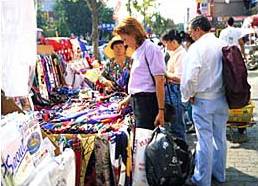
| Itaewon is the most exotic place in Seoul, with its fusion of cultures, giving it a distinctive atmosphere. Many people say, ?œYou may not know Seoul, but you should know Itaewon,??showing how renowned of a shopping district Itaewon is. The Itaewon shopping area covers a 1.4 km long street, stretching from Itaewon 1-dong eastwards to Hannam 2-dong. The area has a vibrant ambience with shops, restaurants, bars and street vendors. Most signboards are written in English, and people are often heard speaking English on the street. More information: http://english.tour2korea.com/06shopping/ ShoppingInSeoul/itae03.asp? kosm=m6_2&konum =subm5_3 |
 |
||
 |
 |
||
Insa-dong
|
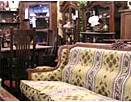
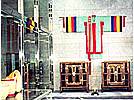
Insa-dong and the surrounding area were the neighborhoods of choice for Chosun Dynasty (1392-1910) officials, extended royal families, and the yangban aristocratic class. The shops that once carried everyday items for the privileged class still line the streets, though their once common goods have now become antiques and art in the face of modernity. Insa-dong is now home to dozens of art galleries and antique shops that are stretched throughout the area's narrow alleys, which branch out in all directions from one main street. To explore the interesting places on these side alleys, it would be helpful to get a map of Insa-dong at one of the three Tourism Information Centers, located at the center and at each end of the main street. |
 |
|
 |
http://english.tour2korea.com/06shopping/ShoppingInSeoul/insadong01.asp? kosm=m6 _2&konum=subm1_1
Historic site: Gyeongbokgung Palace
Gyeongbokgung, 09:00 - 18:00
Closed: every Tuesday
Ticket cost: 3,000 won
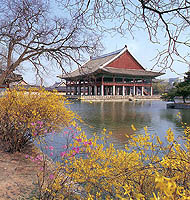
GyeongBokGung Palace was built in 1395, the fourth year of the reign of King Taejo. The palace, named 'GyeongBok' or 'shining happiness,' was built as a tribute to the permanent happiness and prosperity of Korea's kings, their children and the people of the nation. It was burnt down during the Japanese invasion of 1592 and was left in ruins until its reconstruction in 1865, during the 2nd year of the reign of Prince Regent Daewongun. |
|
| More information: http://www.visitseoul.net/jsp/english_new/see/ts01_01 _01.jsp? template_id=103&info_id= 1010000005&onloadset2_num=1 |
 |
Museum : National Folk Museum of Korea
The National Folk Museum of Korea, 09:00 - 18:00
Closed: every Tuesday
Ticket cost: 3,000 won
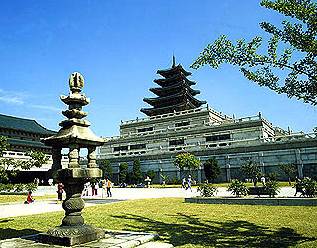
| The National Folk Museum of Korea recreates the lifestyle of ancient Koreans. There are 20,000 pieces in the collection, with a total of 4000 folk relics. In the Center Hall there are traditional culture or folk-related exhibits. The Hall of Korean Lifestyles??shows the lifestyles of Koreans from pre-historic times through the Chosun Period (1392~1910). You can compare the cultural characteristics and vestiges by period and also see the development of pottery, agricultural implements and prints. The 2nd Exhibition, called ?œHall of Koreans at Work,??displays tools for farming, hunting, and fishing, along with clothes and houses. It includes handicrafts, accessories, dishes, kimchi and jangdokdae. The 3rd Exhibition is called the ?œHall of a Korean Life Cycle??and presents the life of an ancient Korean from birth to marriage to death. The outside of the museum is more interesting than the inside. The Jejudo Island sculptures, such as DolHaruBang are displayed outside, along with windmills, treadmills and sheds. The National Folk Museum holds a ?œKorean Folk Concert?? every Saturday at the auditorium. The National Folk Museum designates the first Sunday of every month as ?œVisit the Museum?? Day and the admission fee is waived. | |
|
More information: http://english.tour2korea.com/ 03Sightseeing/DestinationsByThemes/ Depth04.asp?sight=Culture& sightseeing_id=97&ADDRESS_1= 6142&ADDRESS_2=5540&ThemeCode =Culture_2&kosm=m3_2 |
 |
Leisure: Han River Ferries
Jamsil, 12:00 - 09:00
Ticket cost: 9,000 won
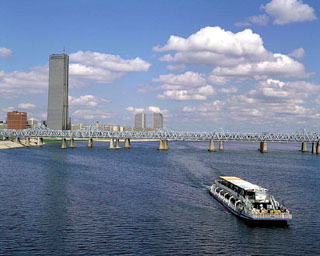 The HanGang River sightseeing boats offer leisurely rides with plenty of fresh air. There are four boarding areas: Yeoui-do, Jamsil, Ttuksum, and Yanghwa, with resting lounges below each wharf. More information: http://english.tour2korea.com/03Sightseeing/DestinationsByThemes/Depth04.asp ?sight=Leisure&sightseeing_id=128&ADDRESS_1=6142&ADDRESS_2=4746& ThemeCode=Leisure_7&kosm=m3_2 |
Museum: National Museum of Korea
National Museum of Korea, 09:00 - 18:00
Ticket cost: 2,000 won
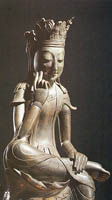
| This international museum maintains 18 permanent exhibitions displaying its collection of almost 5,000 artifacts and is also equipped with video-viewing rooms and audio and video guide systems. The museum was recently relocated to its new premises in YongSan Family Park, offering expanded capacity to accommodate larger exhibitions in the future. Moreover, the new facility will be a versatile and multipurpose cultural space equipped to take on research and public education in traditional culture and to serve as a platform for international exchange.
More information: http://www.museum.go.kr |
|
|
 |
||